Food Security Starts with the Cold Chain: Why Australia Must Recognise Its Critical Role
The United Kingdom's Cold Chain Federation has released a white paper calling for cold chain infrastructure to be recognised as Critical National Infrastructure.
At the same time, Australia is undertaking its own food security review and national supply chain assessment. The parallel conversations occurring on opposite sides of the world highlight an important reality: food security is about far more than food production. It relies on a resilient cold chain capable of safely storing and distributing essential products during times of disruption.
As governments increasingly focus on national preparedness and resilience, the role of the Australian cold chain has never been more important.
As governments around the world sharpen their focus on food security and national resilience, one message is becoming increasingly clear: food security is impossible without a strong and resilient cold chain.
The RWTA applauds that in the United Kingdom, the Cold Chain Federation has released a white paper, The Critical Link: A Resilience Strategy for Protecting UK Food Supply Against Growing Threats to the Cold Chain, calling for the country's cold chain infrastructure to be formally recognised as Critical National Infrastructure. The report argues that growing threats, including energy instability, cyber-attacks, climate impacts, labour shortages and global supply chain disruptions, are increasing risks to food availability, affordability and access.
While these discussions are occurring in the United Kingdom, Australia is facing many of the same challenges.
Recent statements from Australia's food sector have highlighted concerns about the nation's preparedness in an increasingly uncertain geopolitical environment. Industry leaders have called for food security to be elevated within national security policy and for greater focus on Australia's reliance on critical inputs such as fuel and fertiliser. The RWTA is involved in and has welcomed the Federal Government's National Food Security Plan and National Food Supply Chain Assessment, while also urging immediate action to strengthen national resilience.
Importantly, Australia's food industry is increasingly adopting a broader view of food security. Rather than focusing solely on agricultural production, stakeholders are recognising the need to consider the entire "Food Security Ecosystem", the interconnected network of agriculture, transport, energy, infrastructure, manufacturing, storage and distribution that ensures food reaches Australian consumers.
At the heart of that ecosystem sits the Australian cold chain.
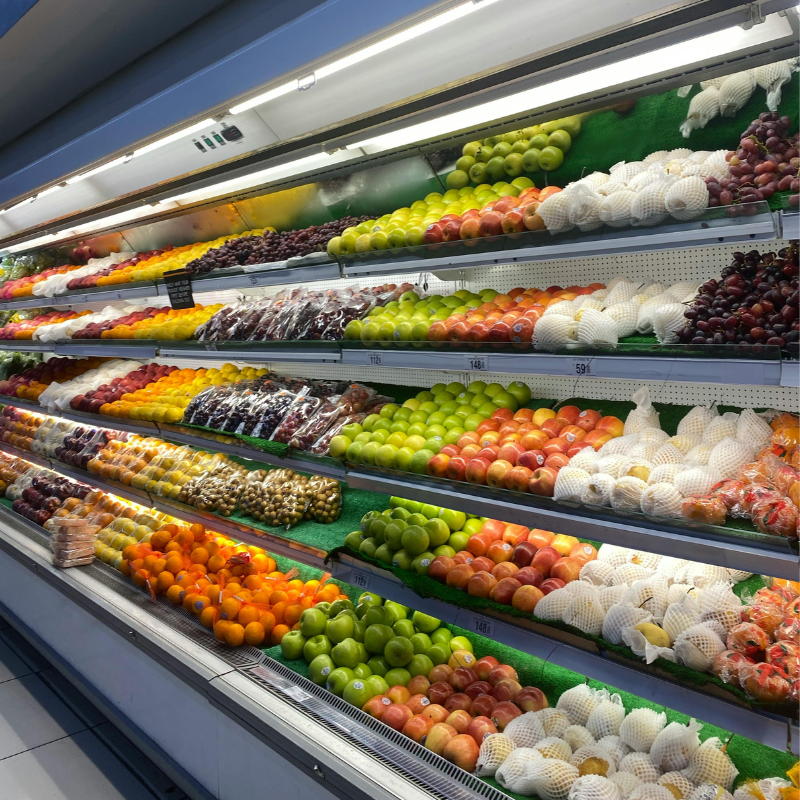
Every day, refrigerated warehouses, transport operators, distribution centres, ports and logistics providers work behind the scenes to ensure food remains safe, available and accessible. Whether it is fresh produce, meat, dairy, seafood, pharmaceuticals or prepared meals, temperature-controlled logistics is the invisible infrastructure that connects producers to consumers. Food security is no longer simply an agricultural issue. It is an economic issue, a public health issue and increasingly a national security issue.
For Australia, this presents an opportunity.
As governments develop future food security strategies and resilience frameworks, the cold chain must be recognised as a critical enabler of national food security. Any discussion about preparedness, sovereign capability, supply chain resilience, or emergency response must include the infrastructure and workforce that store, transport and distribute the nation's food.
The Australian cold chain has long delivered resilience through innovation, investment and operational excellence. However, as global risks continue to evolve, there is a growing case for governments and industry to work together to ensure the sector receives the recognition it deserves.